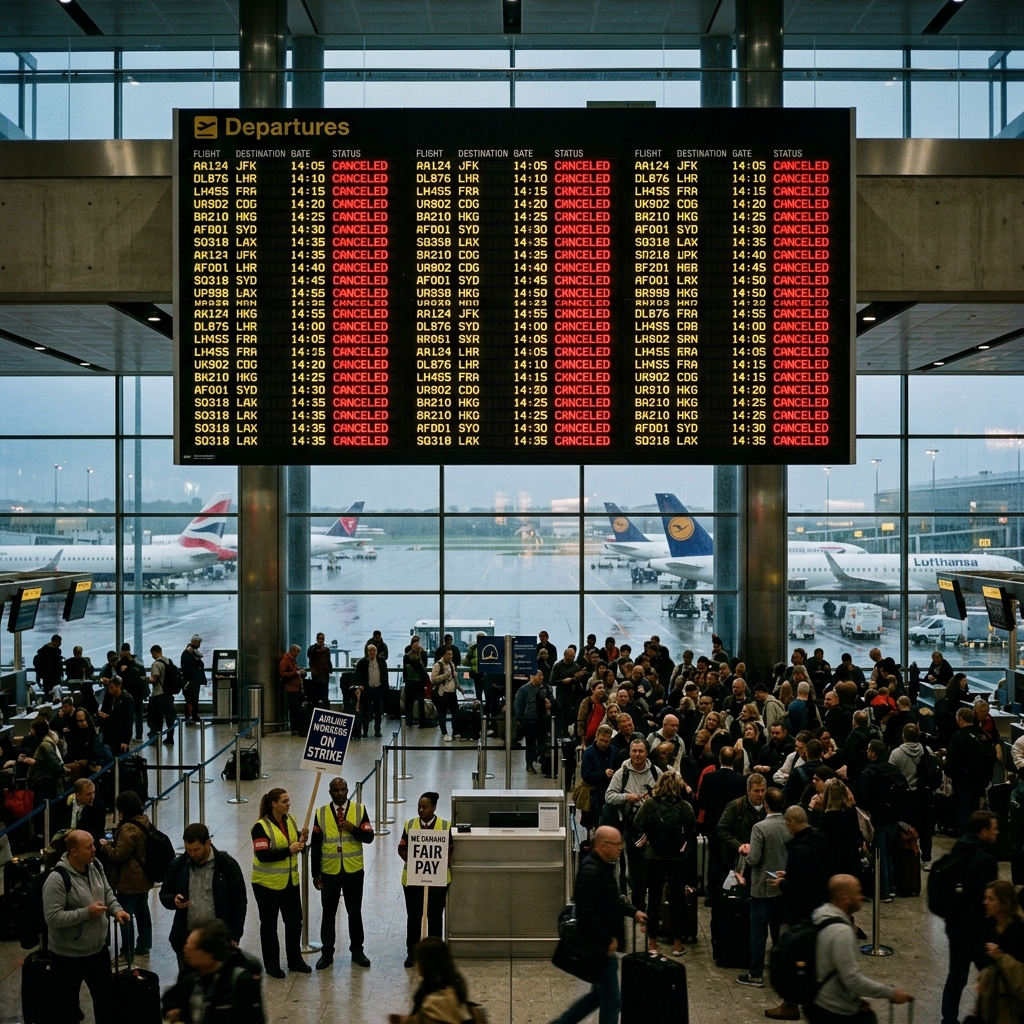
Airline strikes are back in the travel headlines, and they are one of the fastest ways for a dream itinerary to turn into a terminal-floor sleepover. Pilots, cabin crews, air traffic controllers, baggage handlers, airport security staff, and ground crews can all trigger disruption that ripples across routes, borders, and connecting flights.
The frustrating part? Airlines may owe you a refund or rebooking in some situations, but that does not always cover the extra hotel, meals, prepaid tours, cruise departure, or non-refundable bookings you lose along the way. That is where travel insurance for airline strikes can become the difference between an annoying delay and a very expensive trip disaster.
Before you book a summer holiday, ski trip, cruise, honeymoon, or bucket-list international itinerary, take five minutes to Compare Plans Here and check how each policy treats strike-related travel disruption.
Are airline strikes covered by travel insurance?
Sometimes, yes — but timing and policy wording matter.
Many comprehensive travel insurance plans include strike coverage under benefits such as:
- Trip Cancellation: Reimburses prepaid, non-refundable trip costs if a covered strike prevents you from taking the trip.
- Trip Interruption: Helps reimburse unused trip costs and extra transportation if a strike forces you to cut the trip short or return home differently.
- Travel Delay: Covers reasonable expenses like meals, hotels, and local transportation after a qualifying delay period.
- Missed Connection: Helps if a strike-related delay causes you to miss a cruise, tour, or onward flight.
However, travel insurance is designed for unexpected events. If a strike has already been announced, is widely reported, or is considered foreseeable before you buy the policy, a new policy may not cover losses connected to that strike.
That is why the smartest move is to buy coverage soon after your first trip payment — not when airport chaos is already trending. If your trip involves multiple flights, a cruise departure, or expensive prepaid bookings, Compare Plans Here before the risk becomes tomorrow’s headline.
The key phrase to look for: “unannounced strike”
Policy language often separates an unexpected labor strike from a known travel problem. You may see terms such as “unannounced strike,” “organized labor strike,” “common carrier delay,” or “cessation of services.”
In plain English, this means your coverage may depend on questions like:
- Was the strike already announced when you purchased the policy?
- Did the strike affect a common carrier such as an airline, rail operator, cruise line, or bus company?
- Did the delay last long enough to meet the policy’s minimum waiting period?
- Did the disruption directly cause your financial loss?
- Can you document the delay, cancellation, receipts, and unused prepaid costs?
Do not assume every plan treats strikes the same way. One policy may offer strong travel delay benefits but limited cancellation protection. Another may cover missed cruise connections but require a longer delay before benefits begin. The easiest way to avoid surprises is to Compare Plans Here and read the strike, delay, and cancellation sections before purchasing.
What airline strike expenses can travel insurance reimburse?
A covered airline strike can create costs in several categories. Depending on your plan and the details of your disruption, travel insurance may help with:
1. Airport hotels and meals
If your flight is delayed overnight because airline staff walk out, travel delay coverage may reimburse reasonable hotel stays, meals, toiletries, and transportation between the airport and hotel.
Look for the plan’s daily limit and total maximum. A policy that pays $150 per person per day feels very different from one that pays $300 per person per day when you are stuck in a pricey airport city.
2. Rebooking and alternate transportation
Trip interruption or missed connection benefits may help cover additional transportation if a strike prevents you from reaching your destination as scheduled. This is especially important if you need to catch a cruise, join a guided tour, attend a wedding, or make an international connection.
3. Lost prepaid bookings
Hotels, excursions, event tickets, rental cars, and tours may be non-refundable even when your airline cancels. If the strike is a covered reason under your plan, trip cancellation or interruption coverage may reimburse eligible prepaid, non-refundable expenses.
4. Extra costs to return home
If a strike strands you mid-trip, the right policy may help pay for alternate flights, extra nights, meals, or transportation so you can get home without absorbing every cost yourself.
What travel insurance usually will not cover
Even strong policies have limits. Airline strike travel insurance usually will not cover:
- Losses from a strike that was already known before you purchased the policy
- Vague inconvenience without a documented financial loss
- Costs paid with refundable credits or vouchers
- Luxury upgrades that are not considered reasonable additional expenses
- Missing receipts, booking confirmations, or official delay documentation
- Fear that a strike might happen if no covered disruption actually occurs
For travelers who want the broadest flexibility, Cancel For Any Reason coverage may be worth considering. It usually costs more, must be purchased soon after the initial trip deposit, and reimburses only a percentage of eligible prepaid costs. Still, it can be valuable when labor negotiations, political unrest, or operational uncertainty make you uneasy.
Airline refund rights vs. travel insurance: what is the difference?
Airline obligations and travel insurance benefits are not the same thing.
If an airline cancels your flight, you may be entitled to a refund, rebooking, or assistance depending on the route, carrier, and local passenger-rights rules. But airline compensation often focuses on the flight itself. It may not reimburse your missed safari, unused ski lodge, lost cruise fare, extra pet boarding, or the non-refundable ryokan you booked in Kyoto.
Travel insurance can fill those gaps when the strike is covered. The best protection often comes from using both: claim what the airline owes you, then use travel insurance for eligible expenses the airline does not reimburse.
Best trips to insure against airline strikes
Strike coverage is useful for almost any trip, but it becomes especially important for:
- Cruises: Missing embarkation can be expensive and logistically difficult.
- Multi-city Europe trips: One airport strike can disrupt a chain of rail, hotel, and flight bookings.
- Japan, Australia, and long-haul itineraries: Replacement flights can be costly and limited.
- Honeymoons and destination weddings: The emotional and financial stakes are higher.
- Peak summer and holiday travel: Full flights make rebooking harder.
- Ski and golf trips: Prepaid resort packages, tee times, equipment rentals, and transfers add up quickly.
If your itinerary has tight connections or high prepaid costs, do not just buy the cheapest policy. Compare Plans Here and prioritize benefits that match the way your trip could actually go wrong.
How to choose the best travel insurance for airline strikes
When comparing policies, focus on these five details:
1. Covered reasons for cancellation and interruption
Search the policy certificate for strike-related language. Confirm whether strikes are listed as a covered reason and whether the policy excludes known or foreseeable events.
2. Travel delay waiting period
Some plans start paying after a 3-hour delay, while others require 6, 8, 10, or 12 hours. Shorter waiting periods can be valuable during rolling strike disruptions.
3. Daily and total delay limits
A $100 daily benefit may not stretch far in London, Tokyo, Paris, or New York. Choose limits that reflect your destination’s real hotel and food costs.
4. Missed connection coverage
This matters if your flight connects to a cruise, tour, safari, train, or separate ticket. Missed connection benefits can be a lifesaver when one cancellation breaks the rest of your itinerary.
5. Documentation requirements
The best policy is still only useful if you can prove your claim. Save airline notices, delay confirmations, receipts, unused booking confirmations, rebooking invoices, and screenshots from the carrier’s app.
What to do if an airline strike disrupts your trip
If your trip is affected, move quickly and document everything:
- Ask the airline for written confirmation of the cancellation or delay reason.
- Keep every receipt for hotels, meals, taxis, toiletries, and rebooking fees.
- Contact your travel insurance emergency assistance line before making major alternate arrangements when possible.
- Request refunds from the airline or travel supplier first where required.
- File your claim promptly with clear documentation and proof of prepaid, non-refundable costs.
A calm paper trail beats a frustrated airport rant every time.
Final take: buy before the strike becomes foreseeable
Airline strikes are unpredictable, disruptive, and often contagious across routes. The right travel insurance policy can help cover delays, missed connections, extra hotel nights, meals, alternate transportation, and prepaid trip costs — but only when the event fits your policy’s covered reasons.
The most important rule is simple: do not wait until a strike is already announced. Buy early, read the certificate, and match your coverage to your itinerary’s real risks.
If you are planning a trip with expensive flights, tight connections, a cruise, or non-refundable bookings, Compare Plans Here now and choose coverage before disruption is on the departure board.