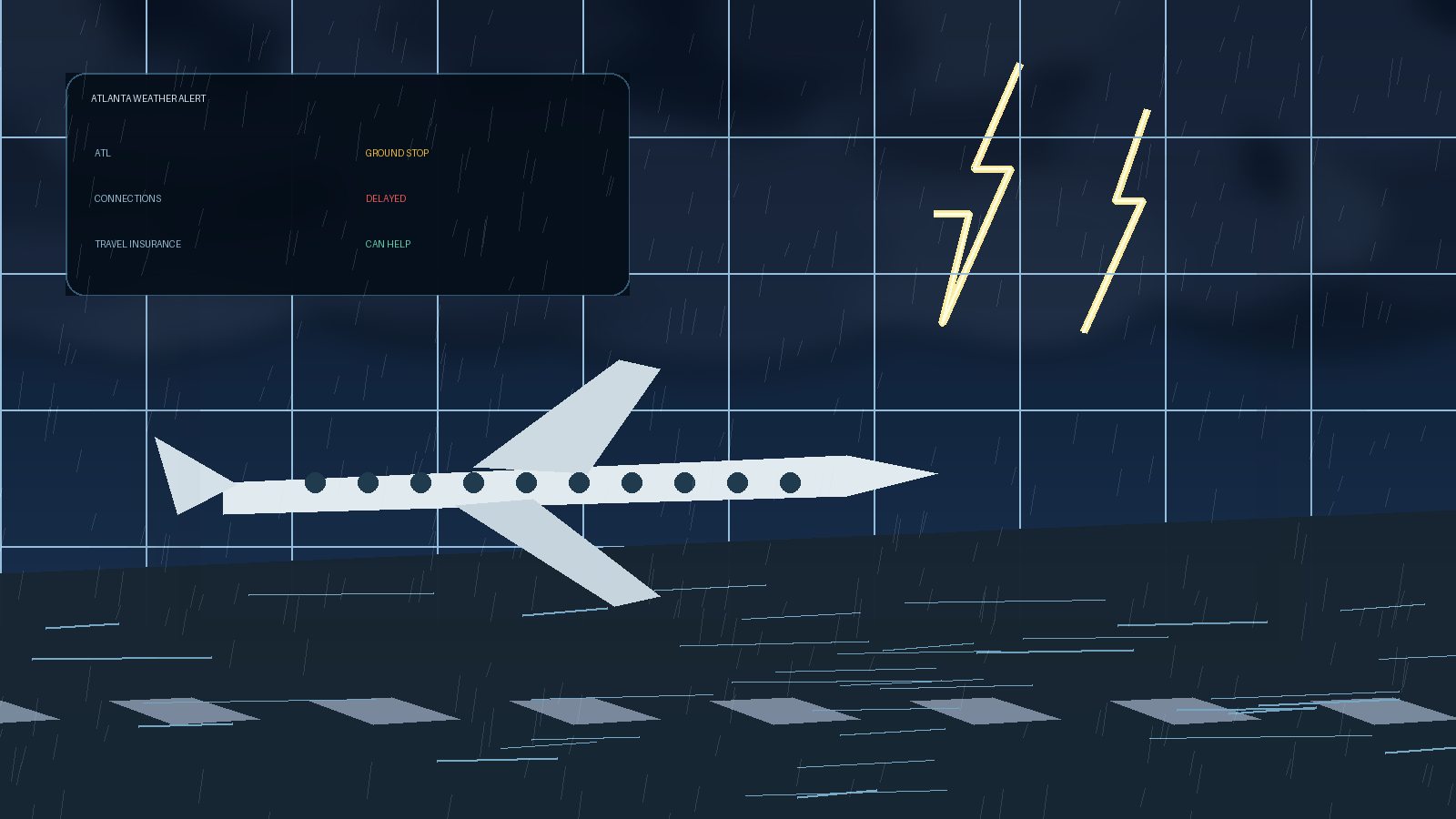
Atlanta thunderstorm flight chaos: what travelers need to know now
A fast-moving round of severe thunderstorms turned Atlanta into one of the biggest travel disruption stories of the week, proving again that summer weather does not need to be a named hurricane or a headline-making disaster to wreck an itinerary.
On July 13, 2026, the New York Post reported that severe thunderstorms in Georgia led the Federal Aviation Administration to declare an immediate ground stop for flights headed to Hartsfield-Jackson Atlanta International Airport. The disruption came after lightning, heavy rain, and strong winds swept across the region, temporarily blocking inbound flights to the world’s busiest airport and rippling through the national air network.
The reported numbers were significant: 2,626 flights were delayed nationwide on Sunday, with 156 more canceled, according to FAA flight-tracking data cited in the report. Atlanta was hit especially hard, with 313 delays and 54 cancellations as storms snarled operations at Hartsfield-Jackson.
If your summer itinerary includes a major hub like Atlanta, Dallas-Fort Worth, Chicago, New York, Denver, or Miami, this is the exact kind of disruption you should plan for before you leave home. Compare benefits, waiting periods, and weather exclusions now: Compare Plans Here.
What happened at Hartsfield-Jackson Atlanta International Airport?
Hartsfield-Jackson Atlanta International Airport is not just a busy airport; it is a global connecting machine. When severe weather forces an FAA ground stop there, the consequences can reach far beyond Georgia.
According to the July 13 report:
- Severe thunderstorms in Georgia brought lightning, heavy rain, and fierce winds.
- The FAA declared an immediate ground stop temporarily blocking flights to Hartsfield-Jackson Atlanta International Airport.
- At least 2,626 domestic and international flights were delayed nationwide on Sunday.
- Another 156 flights were canceled.
- Atlanta recorded 313 delays and 54 cancellations as the airport absorbed the storm impact.
- Storm conditions were expected to linger around Atlanta through Tuesday as a cold front pushed south and collided with warm Gulf Coast air.
For travelers, the most important detail is not just the number of canceled flights. It is the way one weather event at one major hub can break several pieces of a trip at once: a missed connection, a lost hotel night, a prepaid tour you cannot reach, a cruise departure you miss by hours, or a family trip that suddenly requires an overnight airport hotel.
That is why comparing travel insurance before peak storm season matters. A policy purchased after severe weather is already forecast, named, or widely reported may treat the event as foreseeable. Before your route is in the path of the next ground stop, Compare Plans Here.
Why Atlanta disruptions spread so quickly
Atlanta is a major connecting point for domestic and international travelers. A passenger flying from Raleigh to Rome, Nashville to Cancun, Jacksonville to Seattle, or New York to Johannesburg may never think of Atlanta as the destination — until the connection fails.
When thunderstorms force aircraft to hold, divert, or wait on the ground, airlines face a chain reaction:
- Inbound aircraft arrive late, leaving crews and gates out of position.
- Connecting passengers miss onward flights, especially on tight layovers.
- Crews can time out, meaning the airline may have a plane available but not a legal crew to operate it.
- Baggage connections break down, creating delayed luggage problems even after passengers are rebooked.
- Airport hotels fill quickly, pushing stranded travelers into higher last-minute rates.
The result is often more expensive than a simple delayed departure. A storm delay can turn into a missed cruise, a forfeited vacation rental night, extra child-care costs, replacement clothes, meals, rideshares, and non-refundable activities that the airline does not reimburse.
Does travel insurance cover thunderstorm flight delays?
Often, yes — if the policy was purchased before the storm became a known event and the delay meets the policy’s requirements.
A comprehensive travel insurance policy may help through several different benefits:
Travel delay coverage
Travel delay coverage can reimburse reasonable expenses when a covered delay lasts longer than the policy’s waiting period. Depending on the plan, that waiting period might be 3, 6, 8, 12, or even 24 hours.
For travelers caught in the Atlanta disruption, this benefit may help pay for:
- Airport meals during a long delay
- A hotel room if the next available flight is the following day
- Taxi, rideshare, or shuttle costs between the airport and hotel
- Essential toiletries or basic necessities during the wait
- Extra parking or local transportation costs caused by the delay
Coverage limits vary widely. One policy may offer $150 per person per day, while another may offer $250 or more. Before buying, compare both the dollar limit and the waiting period: Compare Plans Here.
Missed connection coverage
Missed connection coverage is especially important for hub airports. If a thunderstorm delay in Atlanta causes you to miss a separately timed onward flight, cruise embarkation, safari transfer, guided tour departure, or train connection, this benefit may reimburse extra transportation and certain unused prepaid expenses.
This can matter most when your itinerary includes:
- A cruise departing the same day as your flight arrival
- A guided tour that starts at a fixed time
- Separate airline tickets booked outside one itinerary
- International connections with limited daily service
- Remote destinations with only one or two flights per day
The key is documentation. Keep airline delay notices, boarding passes, receipts, and proof of the original schedule.
Trip interruption coverage
Trip interruption may apply if a covered severe-weather event forces you to cut a trip short or miss a substantial portion of prepaid travel.
For example, if the Atlanta ground stop caused a traveler to miss the first two nights of a non-refundable resort stay or the first day of a prepaid tour, trip interruption benefits may help reimburse unused prepaid costs and additional transportation needed to catch up to the itinerary.
Not every inconvenience qualifies, and policies define covered reasons differently. That is why travelers should compare wording instead of buying on price alone: Compare Plans Here.
Baggage delay coverage
Severe weather can separate passengers from bags when flights are canceled, rerouted, or rebooked through different cities. Baggage delay coverage can reimburse essentials if checked luggage is delayed beyond the policy’s waiting period.
Covered purchases may include:
- Toiletries
- A change of clothes
- Weather-appropriate basics
- Necessary chargers or travel essentials
As always, save itemized receipts and airline baggage reports.
What travel insurance usually will not cover
Travel insurance can be powerful, but it is not a blank check. Travelers affected by the Atlanta storm disruption should watch for these common limits:
- Known-event rules: If you buy after the storm is already forecast or the FAA ground stop is already public, new coverage may not apply to that event.
- Short delays: If your policy requires a 6-hour delay and your flight arrives 4 hours late, travel delay benefits may not trigger.
- Airline-controlled refunds: If the airline refunds a canceled flight, insurance generally will not pay the same cost twice.
- Missing documentation: Claims usually require proof of delay, receipts, and evidence of non-refundable losses.
- Fear of future weather: Standard trip cancellation coverage typically does not let you cancel simply because you are worried more storms could happen later. Cancel For Any Reason coverage is different, but it must usually be purchased soon after the first trip payment.
What to do if your flight is delayed or canceled by thunderstorms
If you are caught in a severe-weather ground stop like the Atlanta disruption, move quickly and document everything.
- Get the reason in writing. Ask the airline app, gate agent, or customer service channel for confirmation that the disruption was weather-related.
- Save every receipt. Meals, hotels, rideshares, toiletries, and rebooking costs should be itemized.
- Do not cancel prepaid bookings too early. Contact hotels, tours, and cruise operators first; cancellation timing can affect reimbursement.
- Take screenshots. Capture delay alerts, cancellation notices, airport advisories, and rebooking options.
- Call the travel insurance assistance line. Many policies include 24/7 help for rebooking, claims guidance, and emergency coordination.
- Know the airline’s responsibility. Airlines may rebook you, but weather disruptions often do not require the same compensation as airline-caused cancellations.
The insurance lesson from the July 2026 Atlanta storm disruption
The Atlanta thunderstorms are a reminder that the most expensive travel problems are often ordinary events in the wrong place at the wrong time. A summer storm at the world’s busiest airport can strand families, business travelers, honeymooners, cruise passengers, and international tourists in a matter of minutes.
The right travel insurance policy can help absorb the financial shock by covering eligible meals, hotels, local transportation, missed connections, unused prepaid trip costs, baggage delays, and emergency travel changes. The wrong policy — or a policy bought too late — can leave you paying out of pocket.
Before your next trip runs through a storm-prone hub, compare plans side by side and look closely at weather-related trip delay, missed connection, baggage delay, and trip interruption benefits: Compare Plans Here.
Bottom line
Severe thunderstorms near Atlanta on July 13, 2026, triggered an FAA ground stop and contributed to thousands of flight delays across the United States. For travelers, the lesson is simple: airport weather disruption is not rare, and it is not always cheap.
If your itinerary includes tight connections, prepaid hotels, cruises, guided tours, or international flights, travel insurance is not just a nice add-on. It is the backup plan that can keep a bad travel day from becoming a major financial loss.
Compare coverage before the next delay board turns red: Compare Plans Here.