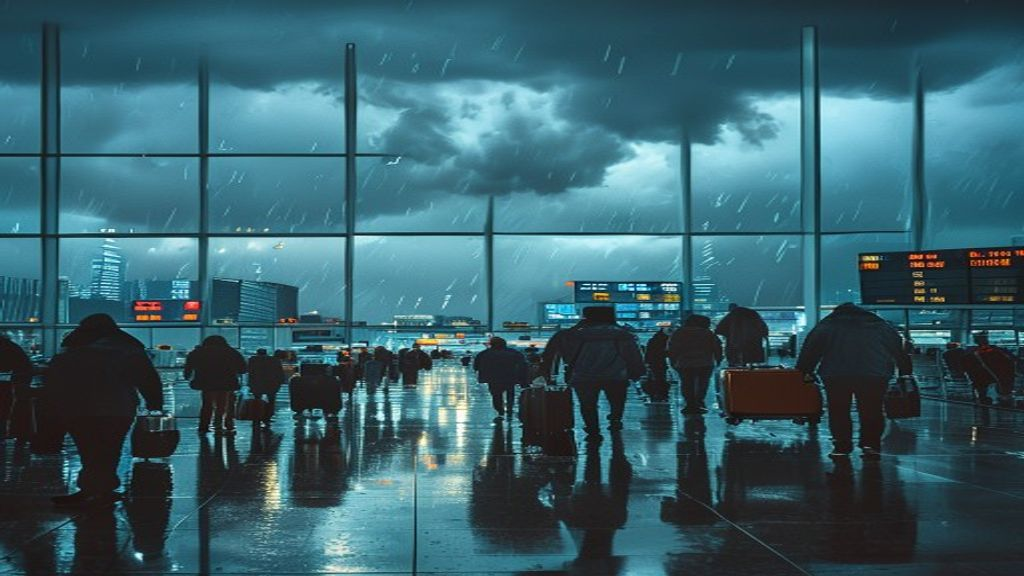
East Coast FAA ground stops: what travelers need to know after JFK, LaGuardia, and Newark delays
A fresh wave of summer air-travel disruption hit the New York metro area on Tuesday, July 21, 2026, when the Federal Aviation Administration issued ground stops and ground delays affecting three of the busiest airports on the U.S. East Coast: John F. Kennedy International Airport (JFK), LaGuardia Airport (LGA), and Newark Liberty International Airport (EWR).
According to a July 21, 2026 travel news report citing the FAA’s National Airspace System Status, thunderstorms along the East Coast were the stated cause of the morning restrictions. The report said the stops and delays were issued around 9 a.m. and were expected to last until 11 a.m. or noon, with JFK and Newark showing a 30% to 60% likelihood of extension. The same report said hundreds of flights had already been canceled on Tuesday as airlines tried to manage the weather-driven disruption.
This is exactly the kind of event that can turn a simple flight delay into a much bigger travel insurance question. A two-hour ground stop can break a tight connection. A canceled inbound aircraft can strand passengers overnight. A delayed arrival into New York can mean a missed cruise, a lost hotel night, or an expensive last-minute reroute.
If you are flying through a storm-prone hub this summer, compare travel delay, missed connection, baggage delay, and trip interruption benefits before your trip becomes a claim: Compare Plans Here.
What happened on July 21, 2026?
The July 21 disruption centered on the New York City airport system and nearby Newark, one of the most important air-travel corridors in the United States.
The key reported facts were:
- Date: Tuesday, July 21, 2026
- Airports affected: JFK, LaGuardia, and Newark Liberty
- Cause cited: Thunderstorms plaguing the East Coast
- FAA action: Ground stops and ground delays
- Timing: Restrictions were reported around 9 a.m., with expected end times around 11 a.m. or noon
- Extension risk: JFK and Newark were reported to have a 30% to 60% likelihood that the ground stop could be extended
- Traveler impact: The report said hundreds of flights had already been canceled by Tuesday
The scale matters because New York-area airports are not just origin-and-destination airports. They are major connection points for domestic, transatlantic, Caribbean, and long-haul international travel. When JFK, LaGuardia, and Newark slow down at the same time, the disruption can spread well beyond New York.
A traveler leaving Boston for Rome through JFK, flying from Florida to Toronto through Newark, or connecting from the Midwest to a cruise out of New York may feel the impact even if New York was never the vacation destination.
Why storm-related ground stops create expensive ripple effects
Ground stops are not ordinary delays. When the FAA restricts aircraft from departing for a destination airport, airlines have to hold flights at their origin, reshuffle gates, protect crews from timing out, and find replacement seats for passengers whose connections are no longer realistic.
That creates several downstream problems:
- Connections collapse. A traveler with a 70-minute connection at JFK can miss the onward flight if the inbound aircraft is held on the ground for two hours.
- Aircraft arrive out of sequence. Even after the storm clears, planes may not be where the schedule expects them to be.
- Crews can time out. A flight can be canceled because the crew runs out of allowable duty time, even if the plane is available.
- Airport hotel demand spikes. When multiple airports are affected, last-minute hotel rooms near terminals can disappear quickly.
- Baggage gets separated. Rebooked passengers and rerouted bags do not always move together.
- Prepaid plans keep charging. Hotels, tours, cruises, rental cars, event tickets, and vacation rentals may not refund you just because your flight was delayed.
That is where travel insurance can help fill gaps that airline rebooking rules do not cover. Airlines may get you on another flight, but they do not automatically pay for every non-refundable travel cost you lose after a storm disruption.
Before booking a route through a major hub during thunderstorm season, Compare Plans Here and pay special attention to the policy’s weather, common carrier delay, missed connection, and trip interruption language.
Does travel insurance cover FAA ground stops caused by thunderstorms?
Often, yes — if the policy was purchased before the storm or disruption became a known event, the cause is covered by the plan, and the delay meets the policy’s waiting-period rules.
Travel insurance is not one-size-fits-all. Some plans define covered delays broadly as delays of a common carrier. Others list specific covered reasons such as severe weather, air traffic control issues, mechanical breakdown, strike, or airport closure. The most important details are the covered reasons, the required delay length, and the reimbursement limits.
For the July 21 East Coast ground stops, several benefits may be relevant.
1. Travel delay coverage
Travel delay coverage can reimburse reasonable extra expenses when a covered delay lasts longer than the policy’s minimum waiting period. Depending on the plan, benefits may begin after 3, 6, 8, 12, or 24 hours of delay.
For travelers caught in the JFK, LaGuardia, or Newark disruption, this benefit may help pay for:
- Meals during an extended airport wait
- Bottled water, snacks, and basic necessities
- A hotel room if the next available flight is the following day
- Rideshare, taxi, train, or shuttle costs between the airport and hotel
- Essential toiletries or overnight items
- Phone chargers or other necessary incidentals
Limits vary widely. One policy may reimburse $150 per person per day, while another may offer $250, $300, or more. In the New York area, where airport hotels and transportation can be expensive, those limits are not minor details.
2. Missed connection coverage
Missed connection coverage may help if a covered delay causes you to miss an onward flight, cruise embarkation, train, tour departure, or other scheduled transportation.
This is especially important for travelers using New York-area airports as gateways to Europe, the Caribbean, or a cruise port. If a ground stop at LaGuardia delays your first flight and you miss an international departure from JFK, the airline may rebook part of the itinerary, but it may not reimburse every extra hotel night, transfer, or prepaid tour you lose.
Some policies focus missed connection benefits on cruises and tours. Others are broader. Compare the definitions carefully before buying: Compare Plans Here.
3. Trip interruption coverage
Trip interruption coverage can help when a covered event forces you to join a trip late, cut it short, or change your route after departure.
For the July 21 ground stops, trip interruption might matter if a traveler:
- Missed the first night of a non-refundable hotel stay
- Had to buy a new flight to catch up with a tour or cruise
- Lost prepaid activities because arrival was pushed back
- Needed alternate transportation after a canceled leg
- Had to return home because the delayed itinerary no longer worked
Trip interruption claims usually require documentation showing the covered reason, the timing of the disruption, and the unused prepaid expenses or extra transportation costs. Save everything.
4. Baggage delay coverage
When storms cause widespread rebooking, baggage can fall behind. Baggage delay coverage may reimburse essentials if your checked luggage is delayed beyond the policy’s waiting period.
Covered purchases may include toiletries, basic clothing, chargers, and other necessary items. Keep itemized receipts and make sure you file a baggage report with the airline before leaving the airport.
5. Trip cancellation coverage
Trip cancellation coverage is more limited once you are already at the airport, but it can still matter in some scenarios. If a covered common-carrier delay makes the trip impossible and the policy allows cancellation after a specified delay length, travelers may be able to recover prepaid, non-refundable trip costs.
This is policy-specific. Some plans require a delay of 12, 24, or 48 hours before cancellation benefits apply. Others may handle the same situation as trip interruption rather than trip cancellation. That is why comparing policy wording before departure matters more than simply choosing the cheapest plan.
What airlines may owe versus what travel insurance can reimburse
Travelers often assume that if a flight is canceled, the airline will cover everything. In reality, airline obligations and travel insurance benefits solve different problems.
An airline may refund a canceled flight, rebook you on another flight, or provide meal and hotel vouchers depending on the cause of the disruption and the airline’s customer-service commitments. But airline help usually focuses on the air transportation itself.
Travel insurance can be broader when the event is covered. It may help with downstream costs such as:
- A prepaid hotel night you missed because you arrived a day late
- A non-refundable tour or event ticket
- Extra transportation to catch up with a cruise or group trip
- Meals and lodging during a covered delay
- Essentials while checked bags are delayed
- Additional airfare if the policy covers reasonable rerouting costs
In a three-airport disruption like the July 21 East Coast ground stops, those downstream expenses can add up quickly.
What affected travelers should do now
If you were affected by the July 21, 2026 FAA ground stops or delays at JFK, LaGuardia, or Newark, take these steps before filing a claim:
- Save written proof of the delay or cancellation. Keep airline emails, app notifications, text alerts, boarding passes, and screenshots showing the reason and timing.
- Ask the airline for the cause in writing. A claim is stronger when you can document that severe weather, FAA restrictions, or a common carrier delay caused the problem.
- Keep every receipt. Meals, hotels, rideshares, toiletries, replacement clothing, and rebooking costs should be itemized.
- Document your original itinerary. Save the scheduled departure, scheduled arrival, connection time, and prepaid trip confirmations.
- Accept airline help when available. If the airline provides a refund or voucher, your insurer may account for it so the same expense is not paid twice.
- Contact your insurer quickly. Many policies require prompt notice and specific claim forms.
- Do not discard baggage tags. They can support baggage delay claims if your luggage arrives late.
How to choose coverage before the next East Coast storm
The July 21 disruption is a reminder that summer travel insurance is not just about hurricanes. Thunderstorms, ground stops, airport congestion, crew timing issues, and missed connections can all create real financial losses.
Before your next trip, compare policies for:
- Travel delay waiting period: Shorter waiting periods can be more useful for hub-heavy itineraries.
- Per-person daily limits: Higher limits matter in expensive airport markets like New York.
- Missed connection wording: Check whether cruises, tours, international connections, and separately booked tickets are covered.
- Trip interruption benefits: Look for reimbursement of unused prepaid expenses and reasonable additional transportation.
- Baggage delay waiting period: Make sure the benefit starts soon enough to be useful.
- Known-event rules: Buy before a storm system, ground stop, strike, or disruption is publicly known.
- Cancel For Any Reason options: If you want flexibility beyond listed covered reasons, compare CFAR upgrades early because they usually must be purchased soon after the initial trip deposit.
The best time to buy travel insurance is before the weather radar, delay board, or FAA advisory makes your specific trip problem foreseeable. For upcoming flights through JFK, LaGuardia, Newark, or any major summer hub, Compare Plans Here while you still have the most options.
Bottom line
The July 21, 2026 FAA ground stops and delays affecting JFK, LaGuardia, and Newark show how quickly East Coast thunderstorms can become a major travel disruption. Even if the weather restriction lasts only a few hours, the ripple effects can last all day: missed connections, overnight stays, delayed baggage, and lost prepaid travel costs.
Travel insurance cannot stop the storm or reopen the runway. But the right policy can help protect your wallet when a covered delay turns into meals, hotels, replacement transportation, missed connections, or unused prepaid expenses.
If you are planning summer travel through a major airport hub, do not wait for the next ground stop to compare coverage. Compare Plans Here and choose benefits that match the real risks of your itinerary.