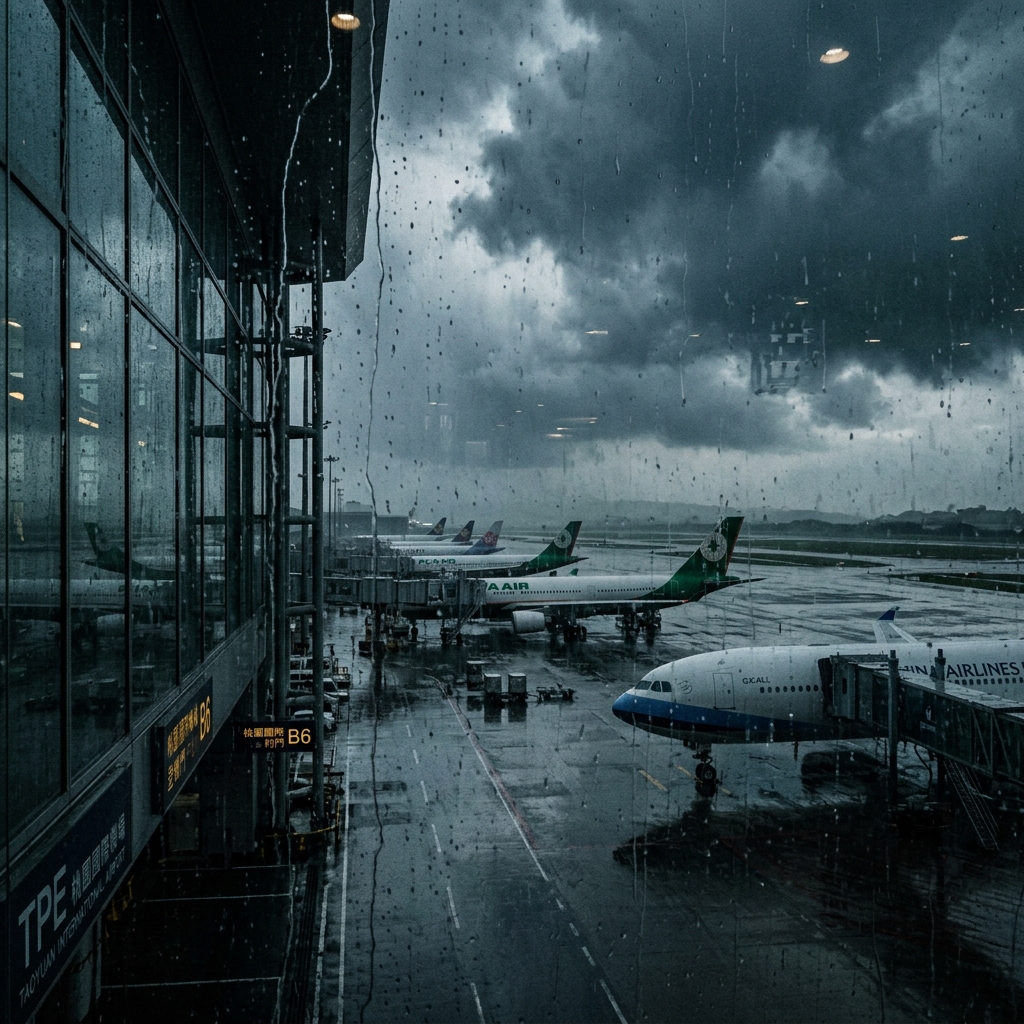
Typhoon Bavi travel disruption: what stranded travelers need to know now
Typhoon Bavi turned a busy July travel weekend into a region-wide scramble across Taiwan, grounding flights, suspending ferry routes, and forcing travelers to rethink plans in real time.
According to Focus Taiwan, ferry and air services were disrupted across Taiwan on Saturday, July 11, 2026, as Typhoon Bavi approached. Transportation authorities reported more than 1,200 canceled flights and 116 canceled ferry sailings across 13 routes. The disruption hit major gateways including Taipei Songshan Airport, Taoyuan International Airport, Kaohsiung International Airport, and Taichung International Airport.
For travelers, the headline is simple: a storm does not have to destroy your destination to destroy your itinerary. One canceled flight can trigger missed hotel nights, lost tours, missed cruises, extra meals, emergency transport, and a very expensive rebooking puzzle.
If you have an upcoming trip through Taiwan, Japan, East Asia, or any typhoon-prone region this summer, compare coverage before the next weather alert becomes a known event: Compare Plans Here.
What happened in Taiwan on July 11, 2026?
Focus Taiwan reported that as of 1 p.m. local time on July 11, the center of Typhoon Bavi was about 250 kilometers northeast of Taipei and moving northwest at 25 kilometers per hour, citing Taiwan’s Central Weather Administration.
The transportation impact was immediate and widespread:
- All international flights into and out of Taipei Songshan Airport, Taoyuan International Airport, and Kaohsiung International Airport were canceled Saturday.
- All domestic flights in Taiwan were canceled Saturday, including routes connecting outlying islands with airports on Taiwan’s main island.
- At Taichung International Airport, all but five flights were canceled; several listed arrivals from South Korea and Vietnam were delayed.
- The Maritime and Port Bureau said 116 ferry sailings on 13 routes were canceled for the day.
- Suspended ferry services included routes linking Taiwan proper with Matsu, Kinmen, Green Island, Orchid Island, Penghu, and Xiaoliuqiu, along with cross-Taiwan Strait ferry services connecting Matsu and Kinmen with destinations in China’s Fujian Province.
The human impact was also significant. In a later July 11 update, Focus Taiwan reported that Typhoon Bavi left 87 people injured, prompted the evacuation of 14,476 residents, and knocked out power in 177,485 households nationwide, citing government data. Authorities also issued high-level landslide and debris-flow warnings in multiple areas as torrential rain hit the island.
That combination — canceled flights, suspended ferries, power outages, flood risk, and evacuation orders — is exactly the kind of fast-moving situation where travel insurance can matter.
Why this event is a travel insurance wake-up call
Typhoon Bavi is a perfect example of why travel insurance is not just for dramatic worst-case scenarios. Many travelers do not need a hospital evacuation or a total trip cancellation to suffer a major financial loss. They simply need one storm to shut down the airport or ferry route that connects the entire itinerary.
Imagine you were scheduled to:
- Fly into Taipei on July 11 for a prepaid hotel stay
- Connect from Taoyuan to another Asian destination
- Take a ferry to Penghu, Kinmen, Green Island, or Matsu
- Join a guided tour departing the next morning
- Board a cruise or attend a wedding after a tight connection
- Return home for work after a fixed vacation window
When transportation stops, the airline or ferry operator may refund or rebook the affected ticket. But that does not automatically reimburse every other loss. Your hotel may still charge for the first night. Your tour may be non-refundable. A replacement flight may cost more. You may need meals, taxis, and an airport hotel while you wait.
That is where a comprehensive travel insurance policy can help fill the gap. If you are planning a trip during typhoon season, start by reviewing storm, delay, cancellation, interruption, and missed-connection benefits: Compare Plans Here.
How travel insurance can protect travelers affected by Typhoon Bavi
Coverage depends on the specific policy, when you purchased it, and whether the storm was already a foreseeable event. But for a sudden severe-weather disruption like Typhoon Bavi, these are the benefits travelers should understand.
1. Trip cancellation coverage
Trip cancellation coverage can reimburse prepaid, non-refundable trip costs if you must cancel your trip for a covered reason before departure.
In a typhoon scenario, this may apply if severe weather makes your destination uninhabitable, shuts down your common carrier for a required period, or triggers another covered reason listed in the policy. Some plans may also cover mandatory evacuations or severe weather that prevents you from reaching your destination.
Examples of potentially reimbursable costs may include:
- Non-refundable hotel bookings
- Prepaid tours or excursions
- Cruise deposits
- Internal flights or ferry tickets
- Event tickets tied to the trip
- Vacation rentals, depending on policy wording
The key phrase is covered reason. Travel insurance is not a blanket refund tool for every inconvenience. It pays according to the contract. That is why it is smart to compare plans before buying: Compare Plans Here.
2. Trip interruption coverage
Trip interruption coverage applies after your trip has started. If Typhoon Bavi stranded you mid-itinerary, forced you to leave early, or made part of the trip impossible, this benefit may reimburse unused prepaid costs and additional transportation expenses.
For example, if you were already in Taiwan and your ferry to an outlying island was canceled, you might lose prepaid lodging or activities at that destination. If your return flight was canceled and you had to book a new route home after the storm, trip interruption coverage may help with eligible extra transportation costs.
Strong trip interruption coverage is especially important for travelers with complex itineraries. A single canceled domestic flight or ferry can break the chain.
3. Travel delay coverage
Travel delay benefits are built for the airport-floor problem: your flight is canceled or delayed long enough that you need food, lodging, toiletries, and transportation while waiting for the next available departure.
In the Typhoon Bavi disruption, travelers whose flights were canceled at Taoyuan, Songshan, Kaohsiung, or Taichung could face overnight delays. Depending on the policy, travel delay coverage may reimburse reasonable expenses such as:
- Airport meals
- Hotel rooms
- Taxis, rideshares, or airport shuttles
- Essential toiletries and clothing
- Phone calls or internet access needed to rearrange travel
Watch the waiting period. Some policies begin paying after a 3-hour delay, while others require 6, 8, 10, or 12 hours. Also compare the daily and total reimbursement limits. In a major storm, hotels near airports can sell out quickly or surge in price.
4. Missed connection coverage
Missed connection coverage is valuable when a covered delay causes you to miss a cruise, tour, or onward flight.
This matters because Typhoon Bavi did not only affect one airport. It disrupted an entire network of flights and ferry routes. A traveler could miss a separate ticket, lose a prepaid island hotel, or fail to reach a cruise embarkation point even if the original airline eventually provides a refund.
A good missed connection benefit may help pay for:
- Additional transportation to catch up with your itinerary
- Reasonable meals and accommodations during the delay
- Unused prepaid costs caused by the missed connection
If your itinerary includes ferries, separate airline tickets, cruises, or remote island stays, this benefit deserves close attention.
5. Emergency medical and evacuation coverage
Focus Taiwan reported 87 injuries as Typhoon Bavi battered Taiwan. Most travelers will never need emergency medical care during a storm, but the risk is real: slippery roads, falling debris, power outages, flooding, and disrupted transport can quickly turn a travel delay into a safety issue.
Travel medical insurance can help cover eligible emergency treatment if you are injured or become ill during the trip. Emergency evacuation coverage may also help if you need medically necessary transport to an appropriate facility, subject to policy terms.
This is especially important for international travelers whose domestic health insurance may not fully cover care overseas.
What travel insurance usually will not cover after a typhoon is already known
The most important timing rule is this: travel insurance generally covers unexpected events. Once a storm is named, forecast, widely reported, or already affecting your route, insurers may treat it as a known or foreseeable event.
That means a policy purchased after Typhoon Bavi was already threatening Taiwan may not cover losses caused by that same storm.
Travel insurance usually will not cover:
- Buying a policy after the typhoon is already a known threat and then claiming storm-related losses
- Choosing not to travel because you are worried, unless your policy includes a covered reason or Cancel For Any Reason coverage
- Costs that are refundable by the airline, ferry company, hotel, or travel supplier
- Missing documentation such as receipts, cancellation notices, and delay confirmations
- Upgrades, luxury replacement bookings, or expenses the insurer considers unreasonable
If you want maximum flexibility, consider Cancel For Any Reason coverage. It is usually time-sensitive, must often be purchased shortly after your first trip payment, and typically reimburses only a percentage of eligible prepaid costs. But it can be useful when you want broader control than standard covered reasons provide.
What affected travelers should do now
If Typhoon Bavi disrupted your Taiwan travel plans, take these steps before filing a claim:
- Save every official notice. Keep airline cancellation emails, ferry suspension notices, airport alerts, and screenshots from booking apps.
- Ask for written confirmation. If an airline or ferry operator cancels service, request documentation showing the date, time, and reason.
- Keep receipts. Meals, hotels, taxis, toiletries, and rebooking costs need proof.
- Avoid unnecessary upgrades. Insurers usually reimburse reasonable extra expenses, not luxury replacements.
- Contact your insurer quickly. Many plans require prompt notice and may offer 24/7 assistance.
- Document refunds and credits. Travel insurance generally reimburses eligible losses after subtracting supplier refunds.
If you do not already have coverage for a future trip, use this event as a reminder to compare plans before severe weather is on the radar: Compare Plans Here.
The bottom line for summer travelers
Typhoon Bavi’s July 11 disruption shows how quickly travel plans can unravel. More than 1,200 canceled flights, 116 suspended ferry sailings, island routes cut off, and thousands of residents evacuated — all in a single fast-moving weather event.
Airlines and ferry operators can help with the ticket they sold you. Travel insurance can help with the wider financial fallout: prepaid trip costs, hotel nights, meals, missed connections, emergency medical care, and extra transportation when a covered disruption throws your itinerary off course.
Before your next international trip, especially during typhoon, hurricane, monsoon, or winter storm season, compare policy wording carefully. The right plan is not the cheapest plan; it is the one that matches the real risks in your itinerary.
Start here: Compare Plans Here.
Sources: Focus Taiwan / CNA English News reports published July 11, 2026: “Typhoon Bavi disrupts ferries, flights across Taiwan” and “87 people injured, 14,000 evacuated as Typhoon Bavi batters Taiwan.”